
Soil Sequence Atlas
To understand the soil-landscape relation it is necessary to study the spatial diversity of soil cover. This variability is partly predictable due to the substantial repeatability of soil units. Depending on dominant soil-forming factor affecting the repeated soil patterns, different types of soil sequences can be distinguished. The influence of relief on the repeated variability of soil cover was first noticed by Milne in 1935 in East Africa. He proposed the term ‘‘catena’’ to describe a transect of soils that are related to the topography. Sommer and Schlichting in 1997 distinguished several archetypes of catenas depending on the mobilization processes and hydrological regimes. The impact of climate on the variability of soil cover is described as climosequences. The diversity of soils due to the different time of development - chronosequences are a suitable tool for investigating rates and directions of soil and landscape evolution.
| Volume | Description | Authors | Publisher | Identification |
|---|---|---|---|---|
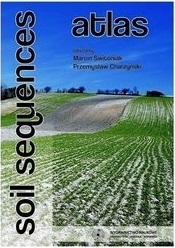 |
An extensive database of soil sequences of various types from the following countries: Hungary, Latvia, Lithuania and Poland. | Marcin Switoniak & Przemysław Charzynski | NICOLAUS COPERNICUS UNIVERSITY PRESS, TORUŃ 2014 | ISBN 978-83-231-3282-0 |
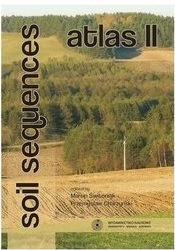 |
The volume focusses on typical landscapes of Central Europe from Estonia furthest north, through Latvia, Lithuania, Poland, Germany, Czechia, Slovakia and Hungary to the southernmost Slovenia. Soils of natural landscapes — loess and sand (continental dunes) - are presented, as well as those of plains of various origin, karst lands, low mountains, and anthropically modified soils. | M. Świtoniak, P. Charzyński | NICOLAUS COPERNICUS UNIVERSITY PRESS, TORUŃ 2018 | ISBN 978-83-949297-7-0 |
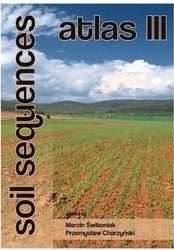 |
At the beginning of the book, two landscapes dominated by Gleysols and gleyic processes were described — tidal flats and marshes in Germany and the flood Plain of the Vistula River in Poland. Next, the mountain areas with Andosols (Slovakia), Lithosols and Podzols (Poland) were presented. The issue of the environment with the dominant podsolization process was continued in the subsequent chapters from Lithuania and Russia. Chapters 8 and 9 are related to Hungarian and Ukrainian soils with a pronounced accumulation of humus in epipedons (Chernozems, Umbrisols, Phaeozems). The book ends with a section on issues related to Clay-illuviated (Luvisols), coarse textured (Arenosols) and technogenic (Technosols) soils in Poland, Estonia and Czechia. | M. Świtoniak, P. Charzyński | NICOLAUS COPERNICUS UNIVERSITY PRESS, TORUŃ 2018 | ISBN 978-83-951878-1-0 |
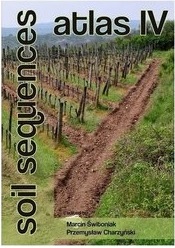 |
The Atlas begins by presenting a pedo-landscape dominated by alluvial and gleying processes (the Vistula River delta in Poland). Next comes a group of chapters devoted to mountainous regions that comprises different soil-forming processes, e.g. podzolisation (Karkonosze Mts., Poland) or humus accumulation (Trialeti Range, Georgia). The second part of the book focuses on issues related to slope processes in different landscapes, from karst sinkholes in the Pre-Ural forest—steppe (Russia), through loess plateaus (Hungary, Belarus) and glacial morainic plateaus (Latvia, Lithuania, Poland) to areas that feature glacial curvilineations or are covered by outwash Plains (Poland). | M. Świtoniak, P. Charzyński | NICOLAUS COPERNICUS UNIVERSITY PRESS, TORUŃ 2018 | ISBN 978-83-951878-2-7 |
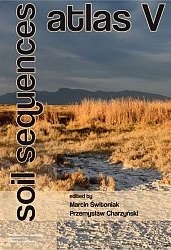 |
15 chapters each representing a different environmental setting specific to very diverse regions from five continents — North and South America, Africa, Europe and Asia. The Atlas begins by presenting a pedo-landscapes from Americas — from Mexico to Peru. Next comes a group of chapters devoted to The Mediterranean Region — Spain, Italy, Slovenia and Tunisia. The next two chapters concern the soils of Central Europe — Hungary and Poland. At the end there are examples of steppe (Russian chernozems), semi-arid (Iran) and subtropical soils of Southeast Asia (Thailand). Out of 32 reference groups, as many as 17 are represented in the fifth part of atlas Soil Sequences Atlas. The most common soils are Calcisols (semi-arid areas) and the soils with Clay illuviation (Luvisols) developed in very diverse environments. | M. Świtoniak, P. Charzyński | NICOLAUS COPERNICUS UNIVERSITY PRESS, TORUŃ 2022 | ISBN 978-83-231060-6 eISBN 978-83-231-4961-3 DOI: 10.12775/978-83-231-4961-3 |