
Australia, 2012
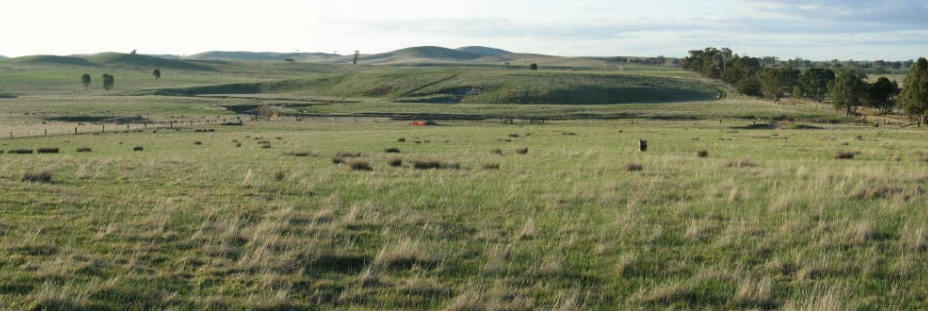
The Australia workshop exposed participants to a wide range of soils across different climatic zones, including arid, semi-arid, and tropical environments. Soils with strong weathering, salinity, and unique mineralogical properties were central to discussions. The community focused on challenges in classifying highly weathered soils and those with diffuse horizon boundaries. There was also attention to the role of soil classification in land management under harsh environmental conditions. Participants compared WRB with national systems, highlighting differences in approach and terminology. The workshop contributed to improving WRB applicability in diverse and complex landscapes.
At the 19th World Congress of Soil Science in Brisbane (2010), we were reminded that Australia had never hosted an official visit of the WRB working group. Excursions conducted in Australia in association with the World Congress provided an opportunity to utilise the WRB for the classification of Australian soils. This was a useful exercise for Australian pedologists who up until then had been largely unfamiliar with the scheme. However, it is probably fair to say that the WRB was not well received because of (perceived) difficulties in correlation with the Australian Soil Classification. In particular, it was felt that the WRB fails to cater sufficiently for the wide range oftexture‐contrast soils present in Australia. However, there was no detailed discussion at a high level about issues associated with the application of the WRB in Australia.
To address this issue, and with considerable encouragement and drive from Peter Schad, an official WRB field excursion in Australia was organised to take place in late 2012. The stated aims of the tour were to:
- Test the WRB soil classification on a range of Australian soils and consider potential adjustments to the WRB to better accommodate these soils.
- Provide an opportunity for Australian soil scientists to gain experience in using the WRB.
It was pointed out that if any changes/amendments to the WRB were proposed to better accommodate Australian soils, these would need to be formalised in 2013 to be incorporated in the next edition of the WRB planned for release in 2014.
Another aim of the tour might have been to also consider potential adjustments to the Australian Soil Classification, especially since one of its stated aims is to “where appropriate use definitions that are compatible with those of major international classification schemes”.
In planning for the WRB Excursion, it was decided to make use of a soils tour that had already been organised in association with the Australian and New Zealand Soil Science Conference that was to take place in Tasmania in December 2012. In addition there would be a supplementary tour on the ‘mainland’ focussing on texture‐ contrast and sodic soils.