Catalonia, 2023
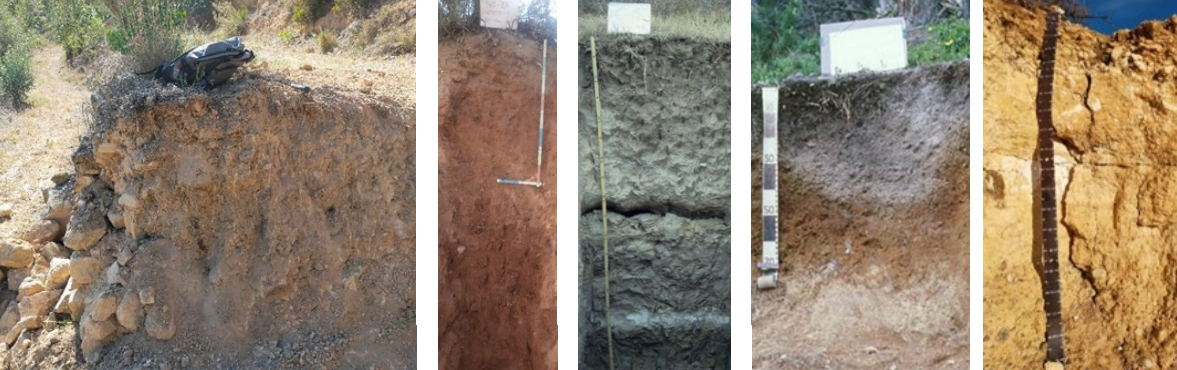
The 2023 WRB field workshop in Spain reflected a mature and highly collaborative soil classification community focused on refining the practical application of the International Union of Soil Sciences World Reference Base (WRB). Excursions across Mediterranean landscapes exposed participants to soils shaped by strong seasonality, drought, and long histories of land use, including Calcisols, Gypsisols, and anthropogenic soils. The workshop emphasized field-based calibration of diagnostic horizons and properties, particularly in relation to carbonate accumulation, salinity, and soil structure under dry conditions. Participants worked intensively on harmonizing classification decisions, comparing interpretations, and improving consistency in WRB application. There was also increasing attention to linking classification with land use, ecosystem services, and soil management. The overall outcome was a refinement of field guidelines and a continued push toward making WRB both scientifically robust and practically applicable.
When we initially embarked on the challenge of organizing a field soil excursion focused on soil classification in Catalonia, our plan was to showcase all the Catalonian soils we believed possessed exceptional significance in terms of morphology, genesis, classification, and land use for the visiting soil scientists. However, as time passed, practicality and common sense prevailed, causing our vision to evolve into a more manageable goal: presenting and discussing a selection of few benchmark soils to show the most noteworthy characteristics of Catalonia’s main soil types, all conveniently accessible by bus for a fairly large group of participants. Situated on the western edge of the Mediterranean, Catalonia’s 32,000 square kilometers shows a great pedodiversity. This diversity arises from a significant altitudinal gradient, ranging from the Mediterranean Sea to the Pyrenees mountain range, reaching elevations of up to 3,143 meters. Contributing to this diversity is the region’s geology, characterized by a variety of parent materials, as well as its geomorphology, shaped by both glacial activity in the Pyrenees and the presence of significant landforms dating back to the Plio-Pleistocene era. Catalonia’s climate is Mediterranean but exhibits strong continental influences in the Ebro Valley, where aridity prevents the leaching of gypsum and carbonates from the soil. Biotic factors, influenced by the aforementioned environmental factors, play a substantial role in this pedodiversity, and human activity has left a profound mark on Catalonian soils, both through destructive and constructive processes. In the end, the soilscapes visited during the WRB 2023 excursion offer samples of benchmark soils from Catalonia, spanning from the driest to the wettest areas in the Pyrenees. The excursion places particular emphasis on soils in arid regions with abundant calcium carbonate and/or gypsum in the parent material, where the application of the WRB 2022 classification system may pose greater challenges. Saline soils are not overlooked, with a brief exploration to underscore the difficulties in classifying and managing them within soil classification frameworks. Field soil scientists often find themselves somewhat disappointed with established soil classification systems, as they frequently struggle to account for human impact on soils, making it nearly impossible to implement ad hoc local solutions. However, the latest versions of WRB and Soil Taxonomy have made significant advances in incorporating the effects of human activities into soil classification. The excursion will include visits to two outstanding soilscapes where human intervention is prominent: the resilient terraced (bancals) Mediterranean tree crop areas and the paddy rice fields of the Ebro Delta. Additionally, time will be dedicated to exploring more typical Mediterranean soils, especially the red soils found on older geomorphic surfaces, but also on younger ones. The driving force behind the selection of benchmark soils for this excursion has been the extensive soil surveys conducted in Catalonia in recent years. The study of these soils has not only facilitated an understanding of their genesis and functioning within the landscape but has also aided in their classification. Furthermore, this knowledge has contributed to improvements in soil survey design and execution, together with land management recommendations. Soil classification serves as a means to understand soilscapes and how this vital component of the biosphere, the edaphosphere, functions. In a world where pressing concerns in the political arena include climate emergencies and soil health and quality, the transfer of knowledge 10 (formerly referred to as technology transfer) becomes a must. Advancements in soil classification will improve the transfer of knowledge between regions and assist in the development of more resilient land-use systems. We sincerely hope that this soil classification field excursion will contribute to these objectives.